
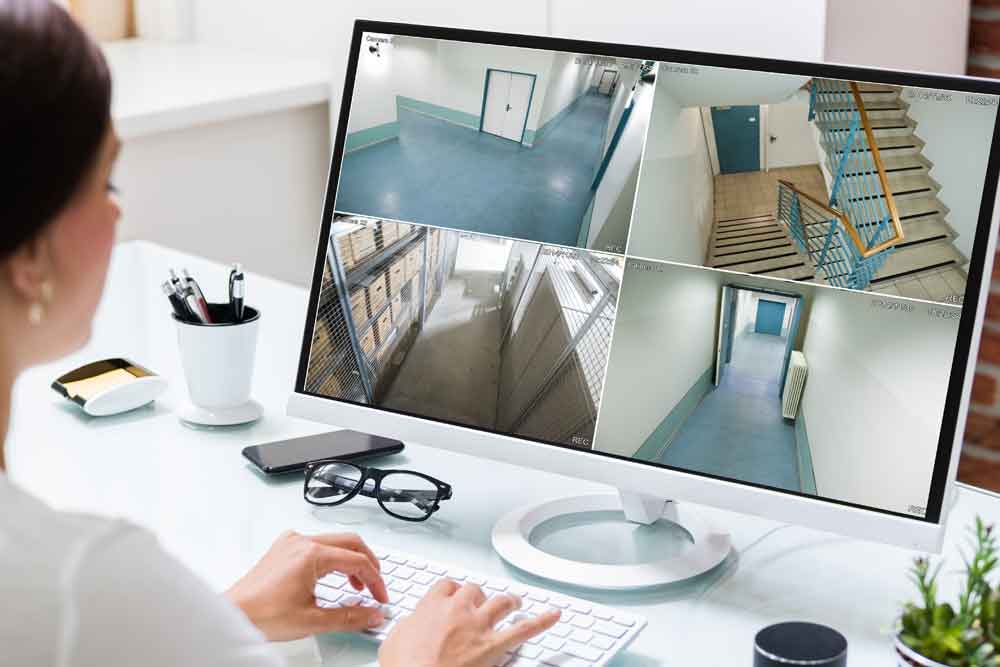
California employers are entering a new phase of workplace AI regulation. Effective January 1, 2027, Assembly Bill 1883 prohibits employers from using AI-powered workplace surveillance tools to recognize, infer, or predict a person’s emotional state or to collect neural data. For HR leaders, employment counsel, and company leaders, the immediate challenge is not deciding whether to buy a device marketed as an “emotion detector.” It is determining whether tools already used for calls, video, security, productivity, coaching, or employee analytics contain features that do the same thing under a different label.
The new rule
AB 1883 adds Labor Code sections 1580 through 1583. It applies to private and public employers and broadly defines a workplace surveillance tool as a system, application, instrument, or device that collects information about employees’ activities, communications, actions, biometrics, or behaviors by means other than direct observation by a person. The statute expressly reaches audio and video surveillance and other photo-optical systems.
The prohibition is narrower than that broad definition. An employer may not use a covered tool that uses AI to recognize, or make inferences or predictions about, an individual’s emotional state. Nor may it use such a tool to collect neural data, meaning information generated by measuring activity in the central or peripheral nervous system. The law does not prohibit workplace monitoring across the board, but it does place certain AI-driven uses off limits.
The Labor Commissioner and public prosecutors may enforce the law. An employer that violates it may face a civil penalty of up to $500 for each violation, along with potential injunctive relief, punitive damages, attorney’s fees, and costs. (A limited exception applies to certain federally governed aerospace, national security, military, space, and defense work.) Governor Newsom’s signing message also acknowledged that the law lacks key definitions and may require refinement, particularly to avoid interfering with legitimate security uses.
The compliance problem is likely hiding in existing technology
The most notable practical risk is a feature that the employer may not realize is enabled. Often grouped under the shorthand “bossware,” workplace surveillance technologies can track employee activity, communications, productivity, behavior, or biometrics, sometimes through features embedded in software the employer already uses. Call center platforms may label a speaker’s tone, frustration, or engagement. Video or coaching tools may analyze facial expressions, voice patterns, pauses, or other behavioral signals. Security products may claim to identify agitation, distress, or aggression. A vendor may describe these functions as sentiment analysis, behavioral insights, engagement scoring, wellness monitoring, risk detection, or quality assurance rather than emotion recognition. The label will not control whether the feature falls within the statute.
That makes AB 1883 a governance issue, not simply an HR software issue. Employers should identify which departments purchase or enable monitoring technology, who reviews vendor updates, and whether optional AI functions can be activated without legal’s review. A vendor contract that promises general compliance is not sufficient. Employers need a feature-level explanation of what the product collects, what it infers, how those outputs are used, and whether the employer can disable or delete them.
Safety tools deserve particular scrutiny. The statute allows tools used to ensure safety if they do not meet the specifications of the prohibition, but it does not clearly authorize an otherwise prohibited emotion-inference feature merely because the employer uses it for safety. Employers incorporating AI-enabled monitoring into workplace violence prevention or security programs should consider separating permissible detection of objective events, such as entry into a restricted area or the presence of a weapon, from an algorithm’s inference that a particular person is angry, distressed, or likely to become aggressive.
What the law means for workplace investigations
For external workplace investigators, the concern is not observing or, with appropriate consent, recording an interview. It is using technology that analyzes facial movements, vocal characteristics, pauses, or other signals to infer emotion, stress, discomfort, or deception.
The distinction matters because demeanor is among the least reliable credibility factors. Nervousness may reflect interview stress, communication differences, disability, trauma, or fear of retaliation rather than dishonesty. Credibility assessments are more defensible when grounded in internal consistency, corroboration, plausibility, motive, opportunity to perceive, and explanations for material discrepancies.
AI-generated emotion or deception scores do not strengthen that analysis. Their reliability is contested, their methods may be opaque, and they can distract from the investigator’s task of weighing testimony against documents, timelines, and other evidence. A finding tied to a transparent evidentiary record is more defensible than one that relies on a proprietary “stress” or “sentiment” score.
What employers and their counsel should do now
- Inventory tools by feature, not product name. Review call-recording, video, transcription, coaching, productivity, wellness, and security platforms for sentiment, tone, expression, stress, engagement, or behavioral-risk functions.
- Ask vendors direct questions. Determine what data the tool collects, what inferences it produces, whether features are enabled by default, and whether outputs are retained or used to train models.
- Disable prohibited functions. Do not assume that a safety, coaching, or quality-assurance purpose removes an emotion-inference feature from the law.
- Build legal review into procurement and updates. In-house and external employment counsel should be included before the employer purchases a tool with this technology, activates a new module, or accepts a vendor update that changes analytics capabilities. Counsel should also confirm that contracts provide enough information and control to identify, disable, and address prohibited functions.
For workplace investigators, the practical step is to confirm that interview, recording, transcription, and case-management platforms do not generate emotion, sentiment, stress, or deception assessments. Engagement terms and investigation protocols should identify approved technologies, and credibility determinations should remain tied to specific, explainable evidence rather than demeanor labels or algorithmic scores.
AB 1883 does not make technology the enemy of a sound investigation or workplace safety program. It does require employers to understand what their technology is doing and to question the premise that a machine can reliably translate a person’s face, voice, or nervous system into an emotional verdict. For California employers and the professionals who advise them, perhaps the better approach is the more defensible one: use technology to preserve and organize evidence, not to manufacture credibility judgments.
Disclaimer: This article is provided for educational and informational purposes only and should not be construed as legal advice. Employers facing a specific situation should consult qualified employment counsel in the relevant jurisdiction for legal advice tailored to their circumstances.